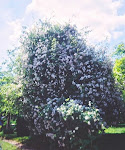
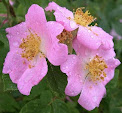

Rosa alba, the White Rose of York is an ancient rose, much loved by Miss Jekyll. It was chosen by the Yorkists for their emblem, against Rosa gallica (or possibly Rosa damascena), the red rose of Lancaster. It is a lovely scented white single rose with attractive greyish foliage.
The story every English schoolchild learns is that sometime around 1450 Richard Plantagenet (Yorkist) and the Earl of Somerset (Lancastrian) met with other nobles in the Temple Garden in London to debate allegiance. Growing in the Temple garden was a bed of roses, white and red. As Shakespeare tells it:
Plantagenet: Since you are tongue-tied and so loath to speak,In dumb significants proclaim your thoughts:Let him that is a true-born gentlemanAnd stands upon the honour of his birth,If he suppose that I have pleaded truth,From off this brier pluck a white rose with me.Somerset: Let him that is no coward nor no flatterer,But dare maintain the party of the truth,Pluck a red rose from off this thorn with me.
The Temple Garden still exists as part of the Inns of Court in London. The name comes from the fact that it was the precinct of the Knights Templar in the 12th century, later passing into the hands of the Knights Hospitaller. The Halls became infested with lawyers in the 14th century, who found the site agreeable and never left.
Of course the Rosa alba picked by Richard may have been the fully double Rosa alba "Maxima", but the the semi-double variety Rosa alba "Semiplena", which is illustrated in the photograph here, is probably older. This has the best claim to be the Yorkists' rose.
Rosa gallica "Officinalis" and Rosa alba "Semiplena" are lovely together just as they were in the Temple garden in 1450. The taller Rosa alba should be in the middle and the gallicas planted around the outside - the result is the purest expression of the rose - that quintessence that entered into western culture in the high Middle Ages and, like the lawyers, never left.


